What Is 808 Day? – Celebrating the Drum Machine That Changed Music
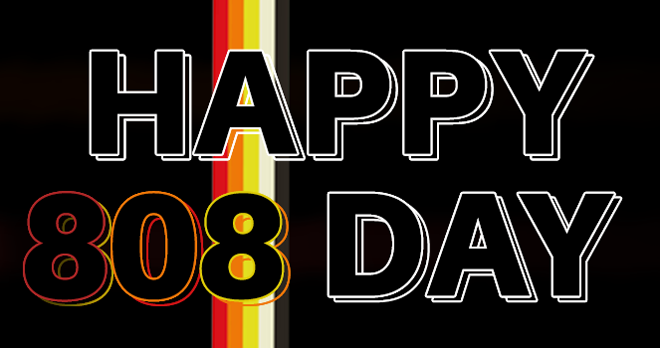
August 8 is known around the world as 808 Day, a celebration of one of the most influential instruments in modern music: the Roland TR-808 Rhythm Composer.
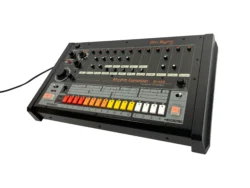
The Roland TR-808 was the brainchild of Ikutaro Kakehashi, the founder of the Roland Corporation. Released by Roland in 1980, the TR-808 was originally designed as a programmable rhythm machine for musicians who wanted to practice and compose without a drummer. But the machine didn’t sound much like a real drummer—and that turned out to be its greatest strength.
The 808’s booming kick drum, sharp snare, metallic hi-hats, handclaps, cowbell, and unmistakable percussion sounds became the foundation for entire genres of music. Early adopters in electronic, hip-hop, electro, pop, and dance music discovered that the machine’s strange, synthetic sounds could be pushed far beyond what Roland originally intended.
It’s analog! The 808 kick in particular became legendary. Its deep, resonant tone could be tuned and shaped into everything from a subtle pulse to an enormous sub-bass explosion. Producers soon realized that a single drum machine could become an entire sonic identity.
As the 1980s progressed, the TR-808 became deeply associated with early hip-hop and electro. Artists such as Egyptian Lover, Afrika Bambaataa & the Soulsonic Force, Marvin Gaye, Run-DMC, and many others helped establish its sounds as part of the vocabulary of modern production. The machine eventually found its way into house, techno, Miami bass, R&B, pop, trap, and countless other styles.
Ironically, the TR-808 was not considered a commercial success when it was released. Roland discontinued it in 1983, and used machines could eventually be purchased relatively cheaply. Producers who recognized its potential helped transform what was once considered an unusual-sounding rhythm box into one of the most valuable and recognizable pieces of electronic music history.
The 808 Gets Cloned
Once producers fell in love with the sound of the TR-808, it was only a matter of time before other manufacturers—and eventually software developers—began trying to recreate it.
Over the decades, the 808 has been cloned, sampled, modeled, emulated, and re-created in countless forms.
Hardware recreations have included instruments such as the Roland TR-8, TR-8S, and Boutique TR-08, as well as machines from companies such as Behringer and Korg. Some recreations use analog circuitry or analog-style components, while others rely on digital modeling to reproduce the behavior of the original machine.
Software took things even further.
One of the most important software recreations of the 808 came from Propellerhead Software with ReBirth RB-338, released in 1997. Rather than simply providing a collection of 808 samples, ReBirth modeled the behavior of the original hardware in software, pairing a virtual TR-808-style drum machine with two TB-303-style bass synthesizers. For producers who couldn’t afford—or even find—a vintage 808 and 303, ReBirth offered an entirely new way to experience these legendary sounds on a computer. It became enormously influential during the rise of computer-based music production in the late 1990s and early 2000s, particularly among electronic, techno, house, and experimental producers. ReBirth was also significant because it demonstrated just how convincing software emulations of classic hardware could be. In many ways, it helped pave the way for the massive virtual-instrument and software-emulation industry that followed, where recreations of vintage drum machines and synthesizers became a standard part of modern music production.
Virtually every major DAW and many virtual instrument developers have offered some form of 808 emulation. Companies such as Native Instruments, Arturia, D16 Group, Sonic Charge, AudioRealism, Wave Alchemy, and many others have created instruments or sample libraries inspired by the classic machine.
And then there are the countless sample packs.
The individual sounds of the TR-808 have been sampled so many times that the 808 kick, snare, clap, hi-hat, and cowbell have become almost like musical building blocks. Producers can now find thousands of variations—clean samples, processed samples, distorted samples, layered samples, synthesized recreations, and sounds modeled after specific vintage machines.
But there is an interesting distinction between sampling an 808 and recreating an 808.
A sample is essentially a recording of the sound. An emulation attempts to reproduce the behavior that generated the sound in the first place. That’s why different 808 emulations can sound surprisingly different from one another. Small changes in circuitry, tuning, envelopes, distortion, filtering, and interaction between the controls can dramatically change the result.
The Boutique 808 Revolution

Beyond the big-name manufacturers, the 808 has inspired an entire world of smaller, boutique hardware makers and independent designers. Over the years, companies such as Jomox, Acidlab, Cyclone Analogic, Din Sync, Erica Synths, and Tiptop Audio have created their own interpretations of the classic Roland circuitry and sound. Some aim for an extremely faithful recreation, while others use the 808 as a starting point, adding modern features, individual outputs, MIDI, expanded sequencing, tuning controls, or completely new sounds. There are also countless small-batch and DIY instruments built by independent synth makers, sometimes produced in quantities of only a few dozen units. This underground hardware scene is a perfect reflection of the 808’s influence: more than 40 years after the original disappeared from Roland’s catalog, people are still studying its circuits, rebuilding its sounds, and finding new ways to put their own spin on one of the most recognizable drum machines ever made.
The 808 Steps Outside the Studio
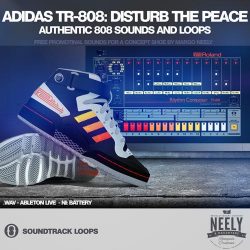
Adidas TR-808: Disturb The Peace – Free 808 Sound and Loops for all DAWS
By the 2010s, the TR-808 had become such a recognizable symbol of music culture that its influence began appearing far beyond traditional instruments and recording studios. One of the most memorable examples was the “Neely Air | Roland TR-808: Disturb the Peace” sneaker concept created by Neely & Daughters for adidas’ mi adidas customization platform. The design transformed the iconic look of the 808 into a pair of sneakers featuring the machine’s unmistakable dark gray, orange, and yellow color scheme, and even imagined the shoes as a wearable drum machine with built-in beat-making capabilities. Although the concept generated worldwide attention, it remained a prototype and never became a commercially manufactured product.
The connection was especially fitting because the promotional video for the project featured 808 sounds from Soundtrack Loops, bringing the iconic character of the machine full circle: a legendary analog rhythm box inspiring a modern visual design concept, powered by new generations of producers and sound creators. It was a perfect example of how the 808 continues to evolve decades after its original release.
Even as an unreleased design, the project perfectly captured how far the TR-808 had traveled from its origins as a humble rhythm machine. The 808 was no longer just a piece of studio equipment—it had become a symbol recognized across music, fashion, technology, and design. Few musical instruments have ever achieved that level of cultural influence.
Download the free 808 loops from this campaign HERE
An Accidental Standard
More than four decades after its release, the TR-808 has become much more than a drum machine. It has become a cultural and sonic reference point.
You can hear its DNA in classic hip-hop records, underground techno, house music, modern trap, contemporary R&B, pop, film scores, video games, and electronic music around the world.
The 808 also helped establish an important idea in electronic music: a machine doesn’t have to imitate reality to become realistic.
The TR-808 wasn’t trying to sound like an acoustic drum kit. It created a completely new sonic vocabulary—and musicians built music around it.
That’s why 808 Day isn’t simply a celebration of an old piece of hardware.
It’s a celebration of what happens when musicians take an unconventional sound, ignore what it was “supposed” to do, and turn it into something entirely new.
The TR-808 may have been discontinued in 1983, but its sounds never really went away.
They just kept getting copied, sampled, modeled, distorted, processed, cloned, reinvented—and played again.
Happy 808 Day.
Add us as a preferred source of information https://google.com/preferences/source?q=soundtrackloops.com
-
808 Sounds


FEATURED BUNDLES
- Sale!
 LoFi Backpack Bundle
6 Gigabytes of Lofi – Backpack Bundle
Original price was: $199.99.$20.00Current price is: $20.00. Add to cart - Sale!
 Drum City - Acoustic Session Drum Bundle
Drum City – Acoustic Session Drum Bundle
Original price was: $190.00.$20.00Current price is: $20.00. Add to cart - Sale!
 EDM BUNDLE
92% Off 20+GB of Royalty Free EDM
Original price was: $615.00.$39.00Current price is: $39.00. Add to cart - Sale!
 10GB of Hip Hop Loops
10GB of Hip Hop Loops & Samples Mixtape Bundle
Original price was: $536.00.$50.00Current price is: $50.00. Add to cart